
The month has ended. Sales were excellent, and the P&L shows a profit and nothing appears to be terribly wrong.
Check the restaurant’s bank account.
The number you received isn’t exactly what you’d hoped for.
For restaurant owners, that gap can be frustrating as profit and available cash appear to tell the same story. They don’t. A P&L evaluates the financial performance over a period while the bank account represents the timing of money actually going into and out the company.
Understanding the difference will change how a restaurant’s owner views their finances.
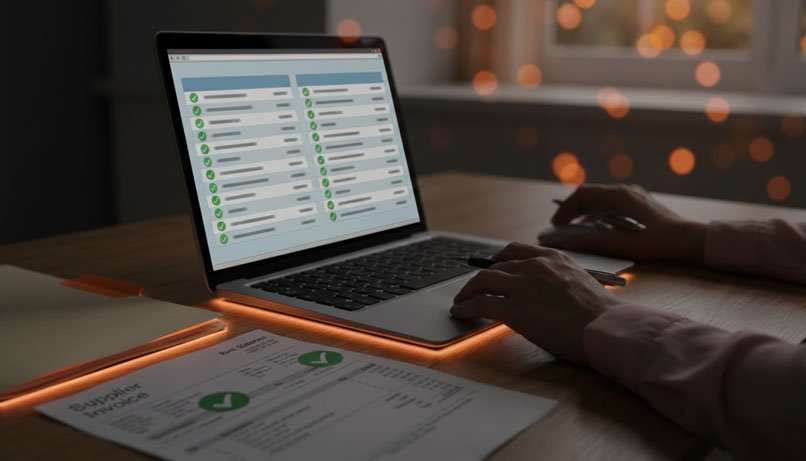
Have a look at what goes on in a typical week. Customers pay for food. Employees have to be paid. Invoices for food and beverages are handed out. Rent is coming. Deposits made with credit cards have their own specific timing. Taxes on sales are collected but it is an obligation.
Meanwhile, next week’s purchasing has already started.
Focusing on revenue only or the final profit figure isn’t a good way to assess the full scope of what happens.
The Key to the Mystery Could Be Hidden in the Prime Cost
If the profitability of restaurants begins to decline, the cost of food, drinks and labor expenses should be taken into consideration.
Together, the cost of the products sold and labor are the main costs. Bookkeeping Chef’s provided guidance places prime costs at approximately 60% to 65 percent for a wide range of restaurants and stresses weekly monitoring rather than staying until the end of of the month.
Effective prime cost management is less about obsessing over a single percentage and more about noticing movement early.
Let’s say that a restaurant typically performs at or near its goal however this week’s performance rises. Maybe overtime was boosted. Perhaps, the costs for beverages remained constant while food costs jumped. A higher percentage of food could prompt the manager to examine purchases, waste management, portions and menu mix, or vendor charges.
The percentage raises a concern. The activities that underlie the restaurant provide the answer.
This conversation is possible because everyone can still remember the details of what transpired.
After two or three weeks, it becomes much more difficult to reconstruct particulars.
Then the Vendor Bills Show Up
A restaurant could purchase the ingredients this week, but then pay for them in the future. This is due to the fact that knowing profits alone will not resolve all cash-related issues.
Vendor invoices should be recieved and tracked. This could be lots of work for an operation that has several suppliers.
Automating accounts payable simplifies the process, cutting down on the time spent on tasks that are repetitive, such as managing payments and bills. The user can have a clearer view of the obligations that haven’t yet landed on their bank accounts by utilizing integrated bookkeeping systems.
It’s important because a bank’s balance when seen in isolation may appear to be healthier than the restaurant’s real-time position.
The current balance could be an amount of $80,000 in the account. That number means something very different if payroll, rent and vendors obligations consume a significant amount over the next several days.
That leads naturally to cash flow forecasting.
The most appropriate question to ask is “What will happen to our money after we receive it and have met our obligations that we know?”
It is important to know the difference between them when deciding whether this week is the ideal opportunity to replace equipment, buy additional products, or conserve the cash flow.
The Money You Received Could Not be Yours
Sales tax highlights this point especially well.
Restaurants receive money from their customers, which they must be able to manage according to the tax requirements. If these dollars are mentally added to cash flow, the balance of the bank account could be misleading about how much cash is available.
Consistent records support the tax compliance of sales while giving the management a better picture of the financials of the restaurant.
Restaurant accounting is more efficient when the financial obligations of each restaurant are separated.
Prime cost affects margin. Vendor purchases affect COGS as well as future payments. Payroll and cash availability are affected by payroll. Cash availability is affected by the sales tax. P&Ls track financial performance, while forecasting lets management look ahead.
The pieces are linked.
Bookkeeping Chef assists in bringing these pieces together with restaurant-focused reports as well as system integrations. Outsourced bookkeeping is a great option for owners who do not wish to be tasked with reconciling their financial records.
It’s the very last one that matters.
Restaurant owners should never stop studying the literature just because they are handled by another. It’s crucial that the owners are informed so that they are aware of what’s happening.
Don’t believe that the P&L is wrong if the balance of the bank seems to be tight, however the P&L confirms that the restaurant made money.
What transpired between the two?
The answer to this question will provide more information about the restaurant than just the name.