
Six years of experience do not necessarily make it easy for a developer to describe the reasoning behind a system design in an interview. A history of successful campaigns does not guarantee that a candidate will remember the right performance numbers when questioned.
A hesitant interview response is not necessarily evidence of poor professional ability. During an interview, candidates must understand unfamiliar prompts while recalling information and presenting their thoughts coherently under pressure.
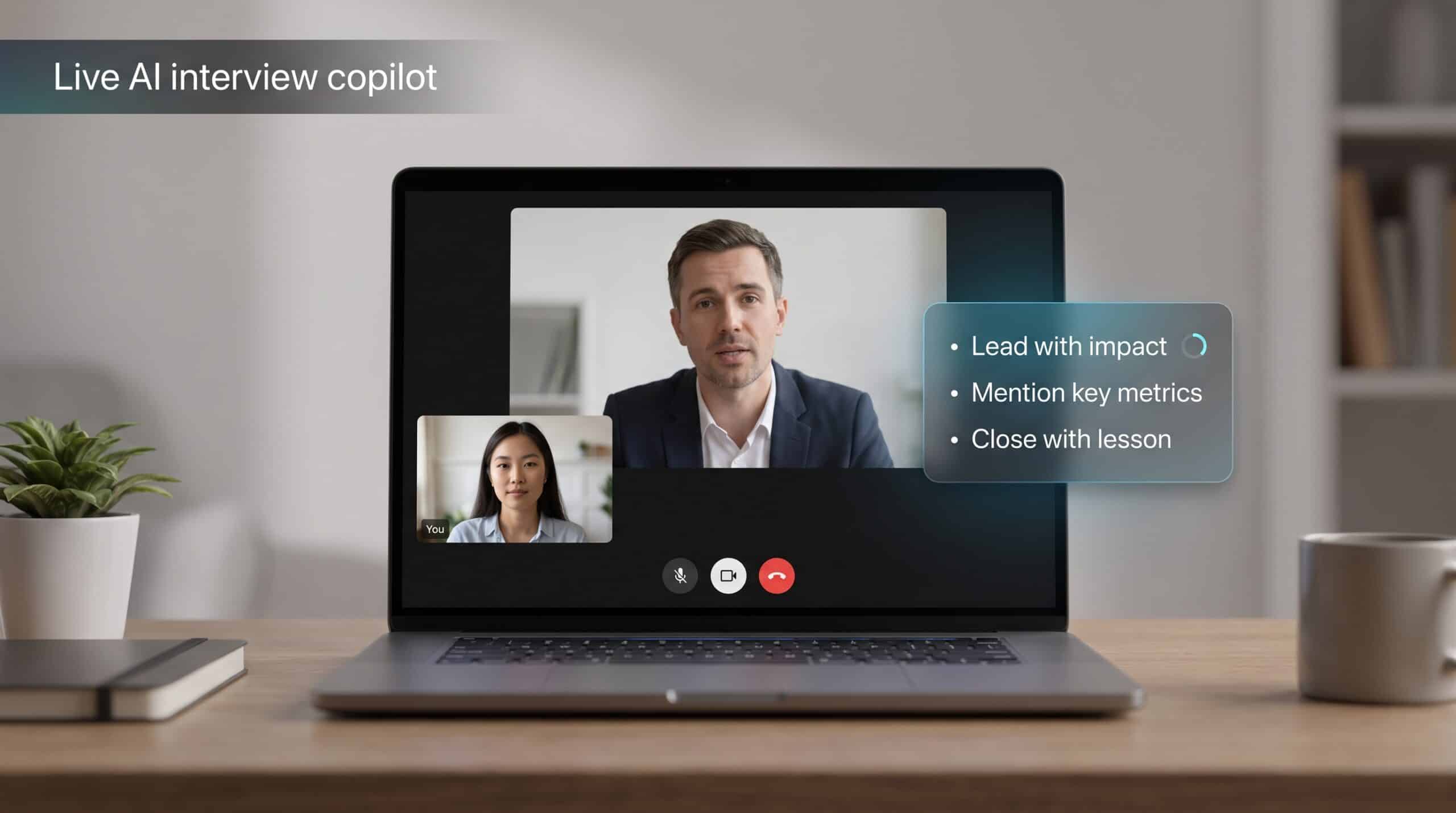
Candidates now have artificial intelligence tools for practicing these abilities. Through personalized practice, simulated interviews, and live response suggestions, Interview Pilot aims to help job seekers feel more confident in professional interviews.
Turn Your Career History Into Interview Preparation Material
Traditional interview preparation often involves initially searching for common questions and memorizing suggested responses. Such stock responses seldom represent the specifics of a person’s real work history.
Take a typical interview question: “Tell me about a time you managed a difficult project.” A strong answer cannot rely solely on a well-rehearsed opening. The candidate should describe the background to the project, clarify their own role, explain their choices, and report the result.
To make its suggestions more relevant, Interview Pilot incorporates details about the user’s CV, the intended job, and the prospective employer.
An AI interview assistant can support preparation by helping applicants decide which experiences to discuss, put the details in order, and identify weaknesses in their explanations. Candidates can then practice recounting those events truthfully in their own words.
Make Technical Reasoning Understandable
An assessment of technical ability goes beyond being familiar with coding languages, software platforms, and engineering principles. Hiring teams often examine the way a candidate approaches a problem and compares possible solutions.
When discussing database optimization, a developer may be asked to describe why indexes made queries faster, the associated trade-offs, and the method used to measure the improvement.
Candidates using Interview Pilot can receive suggestions for technical prompts as well as behavioral questions. Its interview copilot functionality processes spoken questions and generates contextually relevant responses.
A suggested response is useful only insofar as the candidate also understands the reasoning behind it. Candidates should be prepared to explain technical decisions independently, particularly when interviewers ask additional questions or modify the original scenario.
Move Beyond Question Lists
Silent review of interview questions cannot fully replicate the process of answering verbally. Verbal rehearsal helps candidates notice communication problems that written practice might miss, such as using lengthy openings, explaining ideas unclearly, or relying on unnecessary technical terminology.
Interview Pilot includes AI mock interviews and an interview question bank, allowing users to practice before meeting a recruiter or hiring manager.
Candidates can practice effectively by responding to one question repeatedly while adjusting the depth of the answer. The same experience could be explained in a thirty-second response during a screening interview and in greater depth during a technical discussion. Adjusting the depth of an answer can make the conversation sound less memorized and more relevant to the interviewer’s questions.
Understand the Rules for AI-Assisted Interviews
When candidates consider tools that provide real-time interview answers, they must also think about professional integrity and what the employer expects. AI assistance may be permitted in certain organizations’ assessments, but other employers require an independent demonstration of ability.
Applicants considering a copilot for interview practice or live assistance should determine whether the employer permits its use before using it in an actual interview. Candidates should also consider privacy-related consent and confidentiality obligations when software processes interview conversations. Suggestions from AI should help applicants express authentic knowledge rather than misrepresent their qualifications or make up professional experiences.
Finding Time for Consistent Interview Practice
Interview preparation often happens between job responsibilities, commuting, and personal responsibilities. Accessibility across devices can make consistent practice easier.
Interview Pilot is available on Mac, Windows, iPhone, Android, and through a web version. According to the platform, it serves more than one million users worldwide and offers a free plan with limited weekly AI usage alongside paid subscriptions for unlimited use.
Ultimately, effective interview preparation isn’t about learning flawless replies by heart. The aim is to feel at ease discussing what you understand, showing your reasoning, and communicating the contribution you could make to an organization.
Interview Pilot can help candidates develop these skills when used responsibly, with their own experience, judgment, and ability to communicate remaining central to the interview.